Blossom Word Game vs Merriam-Webster’s Original – What’s the Difference?
Searching “blossom word game merriam webster” usually means one of two things: you want to know if this site is connected to the real Merriam-Webster game, or you’re curious where the honeycomb format actually came from. Here’s the honest answer to both.
Is This Site Connected to Merriam-Webster?
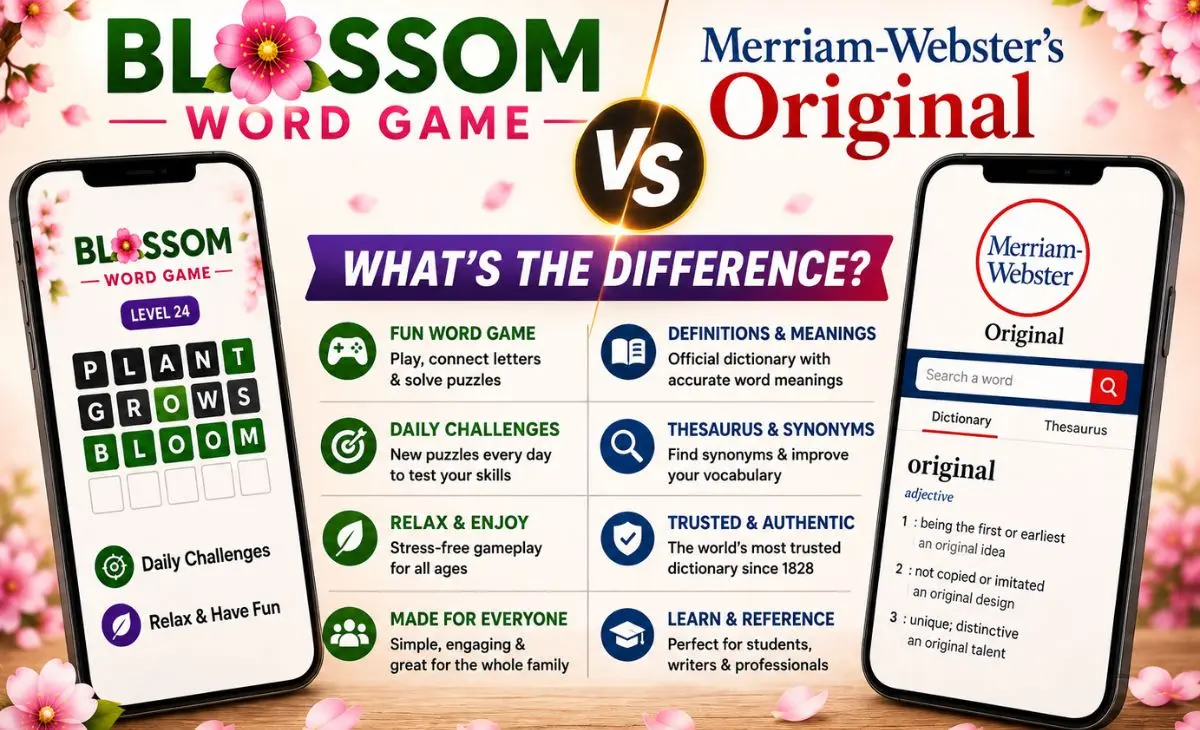
No. Merriam-Webster publishes its own version of Blossom directly on merriam-webster.com — that’s the official one, built and maintained by the dictionary company itself, founded in 1831. This site runs an independently built version, inspired by the same honeycomb format, with no official link to Merriam-Webster or their word list.
That’s a genuinely common source of confusion, since several sites use the “Blossom” name for their own honeycomb-style puzzle. If you specifically want the original Merriam-Webster version, it’s on their site. If you’re here, you’re playing this site’s own build of the format.
Where the Honeycomb Format Actually Came From
The seven-letter honeycomb format — one centre letter, six outer letters, every word required to include the centre — was popularised by the New York Times Spelling Bee, which launched in 2014. It proved a genuinely good structure: enough letters to generate real depth, a natural scoring curve by word length, and a format that stayed replayable day after day without getting stale.
Since then, several publishers and independent sites have built their own versions of the same core mechanic, each with a different name and a different word list behind it. Merriam-Webster’s Blossom is one of them. This site is another.
How This Version Works
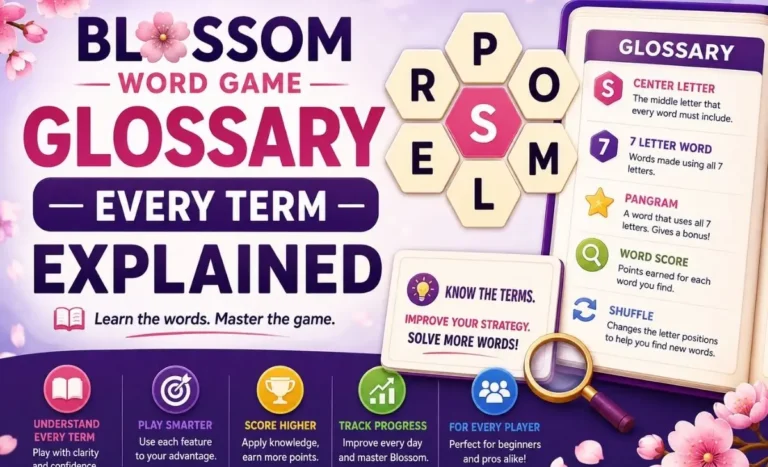
Seven letters sit in a flower shape. One occupies the centre. Six surround it. Every word must include the centre letter and be at least four letters long. Letters can repeat within a single word. Longer words score more, and finding a pangram — a word using all seven letters — earns a bonus on top of the standard score. A fresh puzzle loads every day, and the previous day’s letters aren’t available once the new one appears.
Ready to play? Try Blossom Word Game today.
Why the Word List Matters More Than the Name
The thing that actually determines whether a word game feels fair isn’t which company’s name sits on it — it’s whether the word list is consistent. A properly maintained dictionary behind the game means every accepted word is genuinely valid and every rejection is genuine too, rather than an arbitrary gap in a crowd-sourced list. That consistency is what separates a trustworthy word game from one where players end up arguing over whether a word should have counted.
Frequently Asked Questions
Is this the official Merriam-Webster Blossom game?
No. The official version is hosted directly on merriam-webster.com. This site runs its own independently built version of the same honeycomb format.
Who actually invented the honeycomb word game format?
The format was popularised by the New York Times Spelling Bee in 2014. Several publishers, including Merriam-Webster, have since built their own versions using the same core mechanic.
Why do different Blossom-style sites sometimes accept different words?
Because each one runs its own word list. A word valid on one site’s dictionary might not appear in another’s — that’s a difference in source data, not a bug.
Is this version free to play?
Yes, completely. No account, no subscription, no payment at any point.
How is this different from NYT Spelling Bee?
Same core honeycomb format — one centre letter, six outer letters, four-letter minimum. Spelling Bee is published by the New York Times and gates most features behind a subscription. This site’s version stays fully free throughout.
There’s no shortage of honeycomb-style word games online right now, each built by a different team with a different word list. What matters for picking one isn’t the name behind it — it’s whether the puzzle feels fair, the word list holds up, and the daily habit is actually worth coming back to.
Got a question this page didn’t answer? Get in touch through the contact page — or follow along on Pinterest for daily letter breakdowns and quick tips.