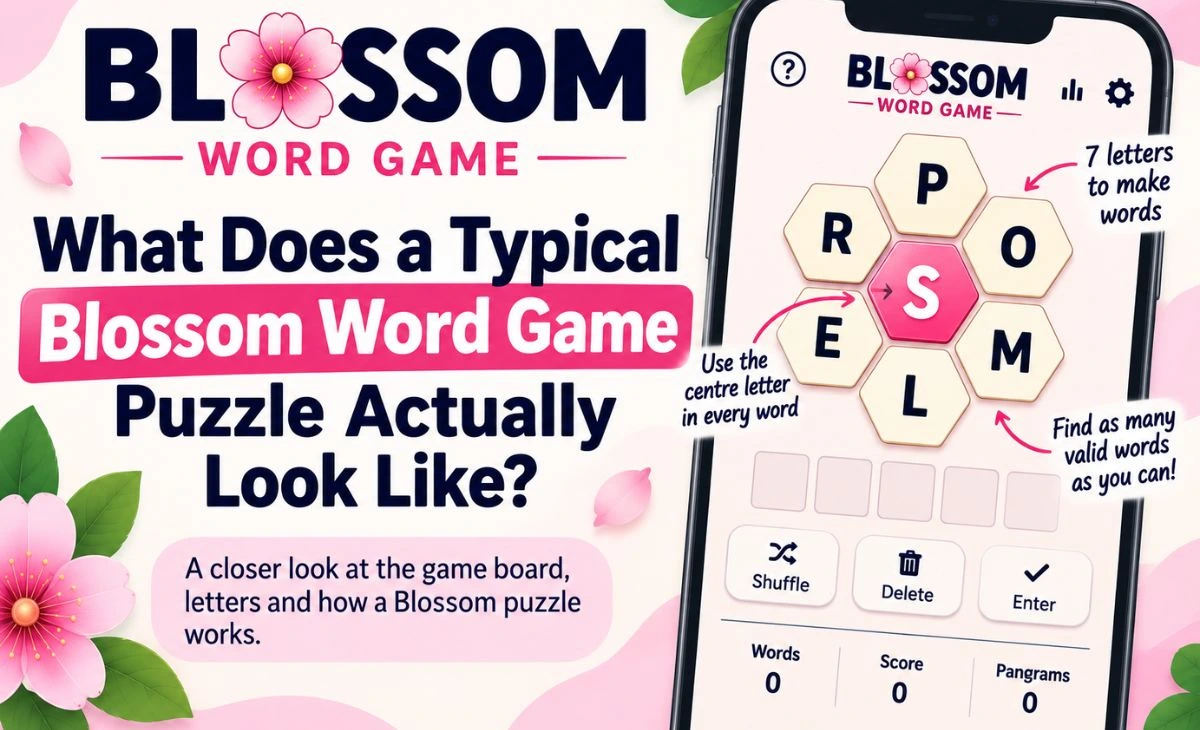
What Does a Typical Blossom Word Game Puzzle Actually Look Like?
Ever wondered whether the puzzle you’re stuck on is genuinely harder than usual, or whether every day feels roughly the same? Here’s an honest look at what a “typical” Blossom Word Game puzzle actually involves, and why some days feel noticeably tougher than others.
Word Count Varies More Than It Feels Like
Not every puzzle offers the same number of valid words. The specific combination of letters — particularly which vowels appear and where the centre letter sits — has a direct effect on how many words are actually findable that day.
A puzzle built around common, flexible letters tends to produce a longer list of valid words. A puzzle with an unusual or restrictive centre letter naturally produces fewer options, purely because fewer English words happen to contain that letter in a useful position.
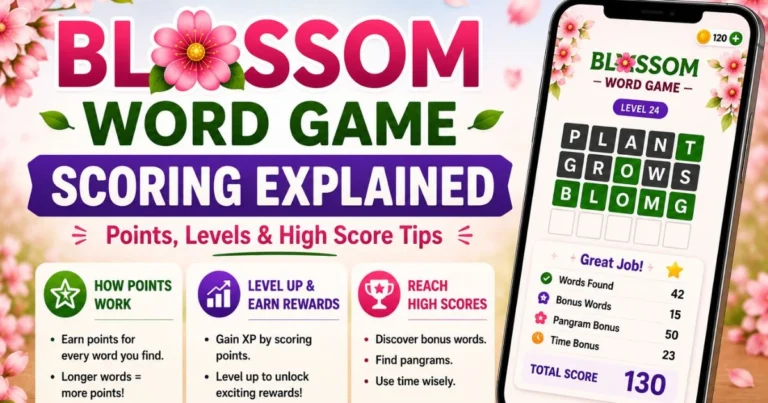
This matters for one practical reason: a lower score on a genuinely restrictive puzzle doesn’t necessarily reflect weaker play. It’s worth judging your own performance relative to how many words that specific puzzle offered, rather than comparing every day against a single fixed number — the scoring guide breaks down what counts as a strong result at each level.
Not Every Puzzle Has a Pangram
A pangram — a word using all seven letters — doesn’t appear in every single puzzle. On the days it does exist, it’s usually the hardest word on the board to spot, largely because it requires threading every available letter into one coherent word rather than just a handful of them.
If you’ve spent a long time hunting for a pangram and come up empty, it’s entirely possible the puzzle simply doesn’t have one that day. There’s no reliable way to know in advance — the only real signal is having genuinely exhausted the more common four- and five-letter options first.
The Centre Letter Shapes the Whole Puzzle More Than People Expect
Some letters are naturally more productive as a centre letter than others, purely because of how frequently they appear across the English language. A centre letter like E or A tends to sit inside a large number of common words, which generally makes for a longer, more forgiving word list. A less common centre letter — something like X or Q — restricts the available options considerably, simply because far fewer English words contain that letter at all.
This is one of the more useful things to understand early on: the letters you’re given genuinely change the shape of the puzzle, not just its difficulty in a vague sense.
Short Words Do Most of the Heavy Lifting
Across most puzzles, four- and five-letter words make up the bulk of what’s actually findable. Six- and seven-letter words exist, but they’re consistently the minority — which is part of why systematically extending a short word you’ve already found tends to be a more reliable route to a higher score than searching for long words from scratch.
Why This Matters in Practice
Understanding these patterns doesn’t make any individual puzzle easier, but it does change how you interpret your own results. A shorter word list, a missing pangram, or a lower score on a given day is very often a property of that day’s specific letters, not a sign that your vocabulary or approach has slipped.
Frequently Asked Questions
Does every puzzle have the same number of words?
No. The number of valid words changes daily depending on the specific letter combination, particularly the vowels involved and which letter sits in the centre.
Why do some days feel much harder than others?
Largely because of the centre letter. Common letters like E or A tend to support a wider range of words, while less frequent letters naturally produce a shorter, more restrictive list.
Is it normal not to find a pangram some days?
Yes. Not every puzzle contains one, and even on the days it does, it’s typically the hardest single word to spot.
Are short words really worth prioritising over long ones?
In terms of pure word count available, yes — four- and five-letter words make up the majority of most puzzles, which is why extending words you’ve already found is often more productive than searching for long ones from the start.
The letters change every day, but the underlying shape of the puzzle doesn’t. Once you understand how the centre letter and vowel mix affect word count, an unusually short session stops feeling like a bad day and starts looking like exactly what it is — a naturally more restrictive set of letters. If you’d rather see it in action, today’s answers show exactly how many words and what type of centre letter are in play right now.